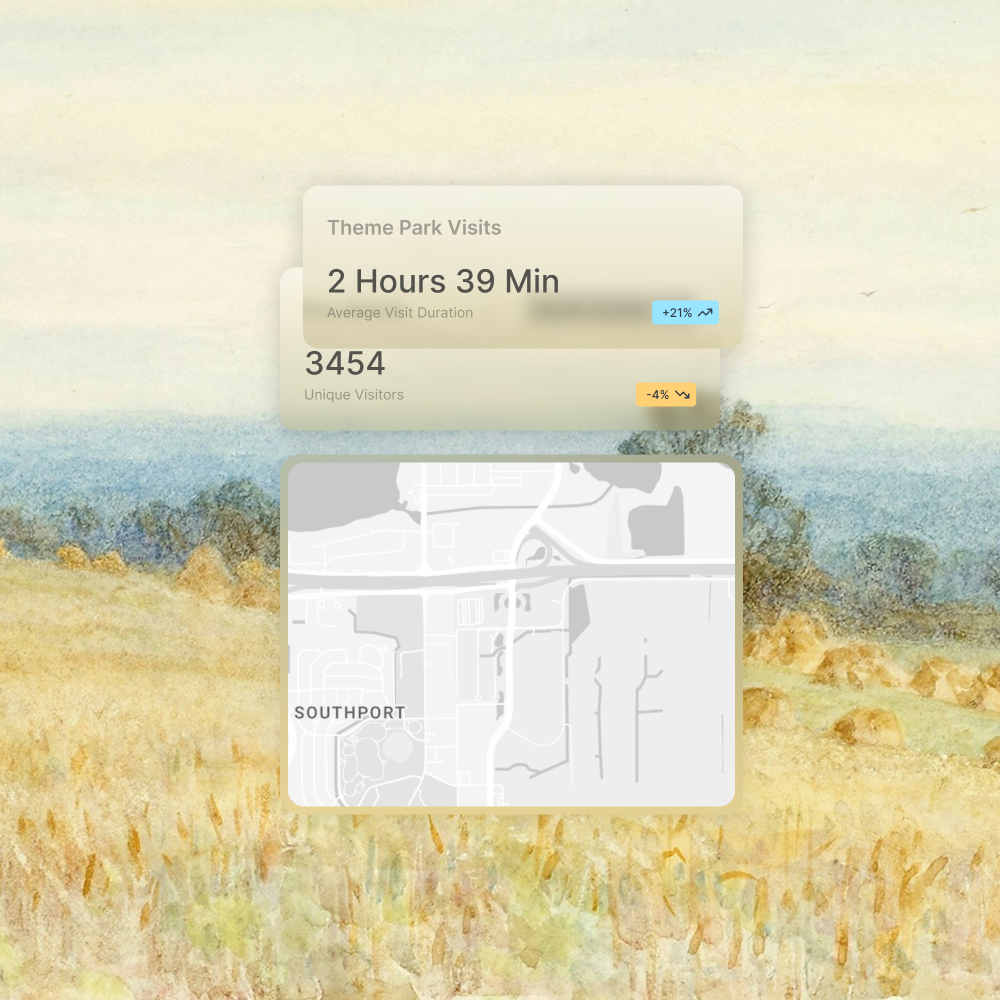
Spot AI Video Agents
ROLE - Design Lead
Spot AI
understand
Video is everywhere - but finding what matters is still manual.
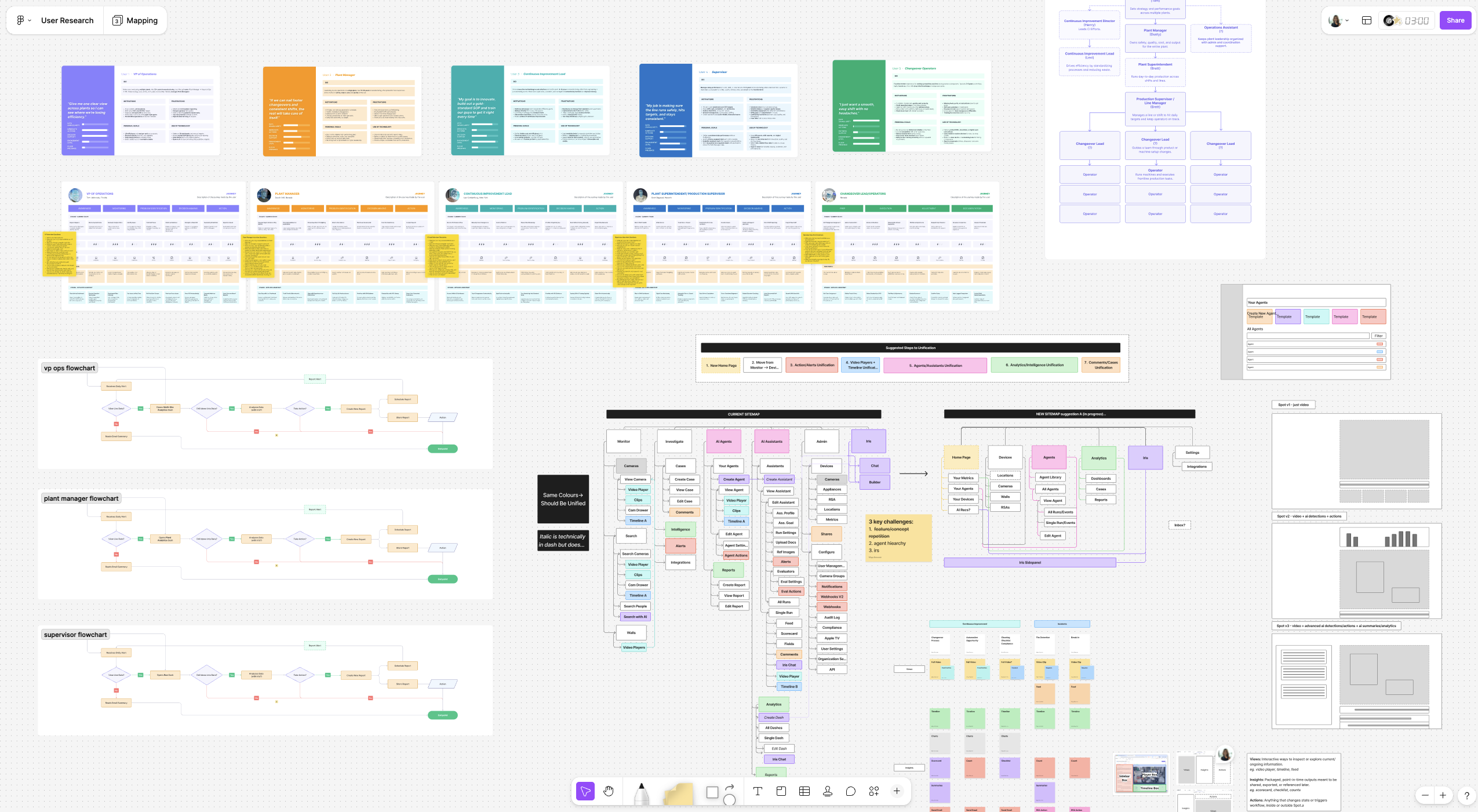
At Spot AI, we partnered with security and operations teams to understand how video fits into real-world workflows, from incident response to daily site monitoring, and where existing systems break down.
define
Traditional video monitoring is reactive - teams only search after something goes wrong.
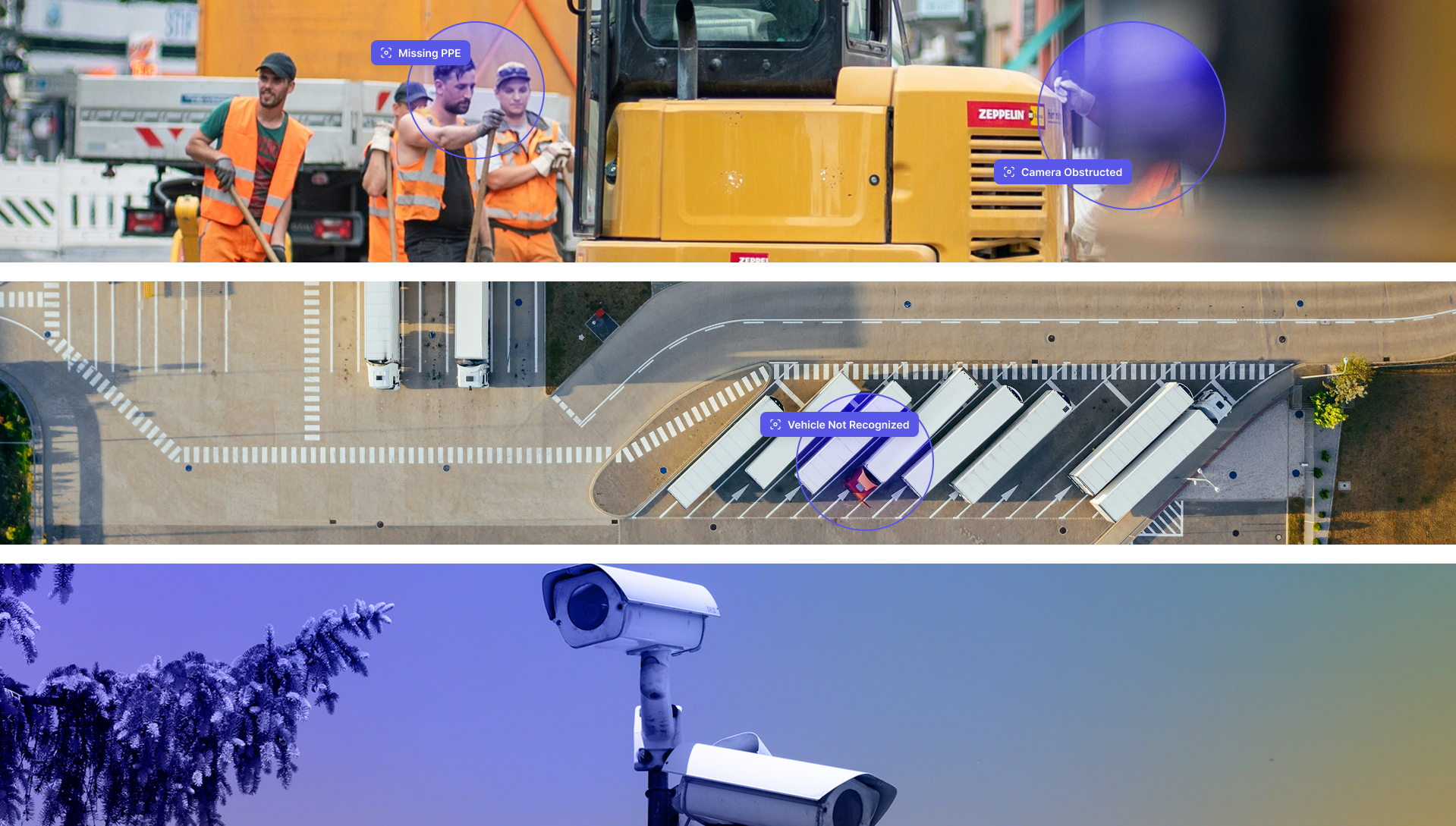
We found that operators were drowning in footage, alerts, and manual review. The tools existed to record incidents, but not to prevent them - and investigation workflows were slow, inconsistent, and hard to scale across sites.
create
What if we revolutionized CCTV Footage with VLMs?
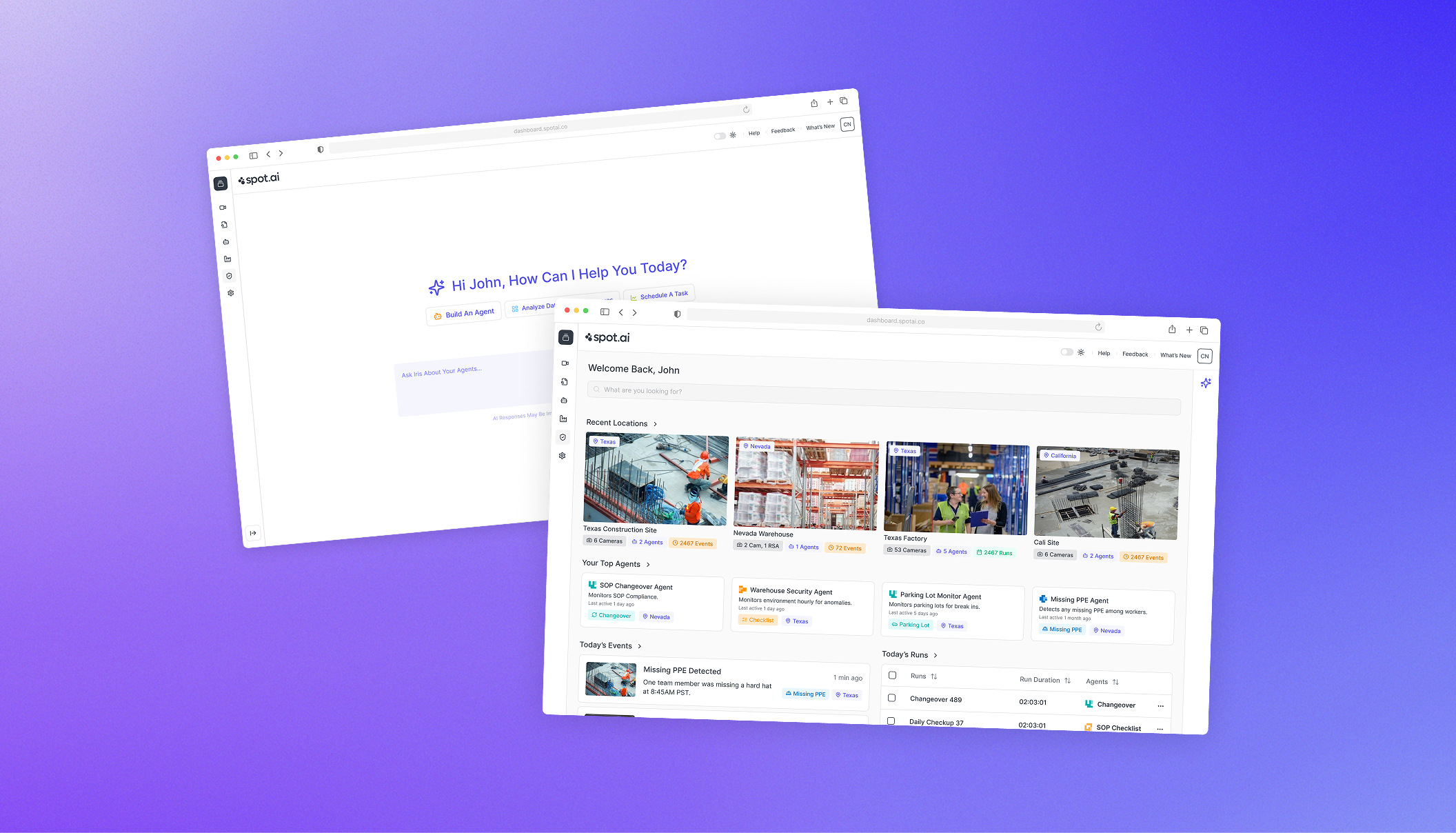
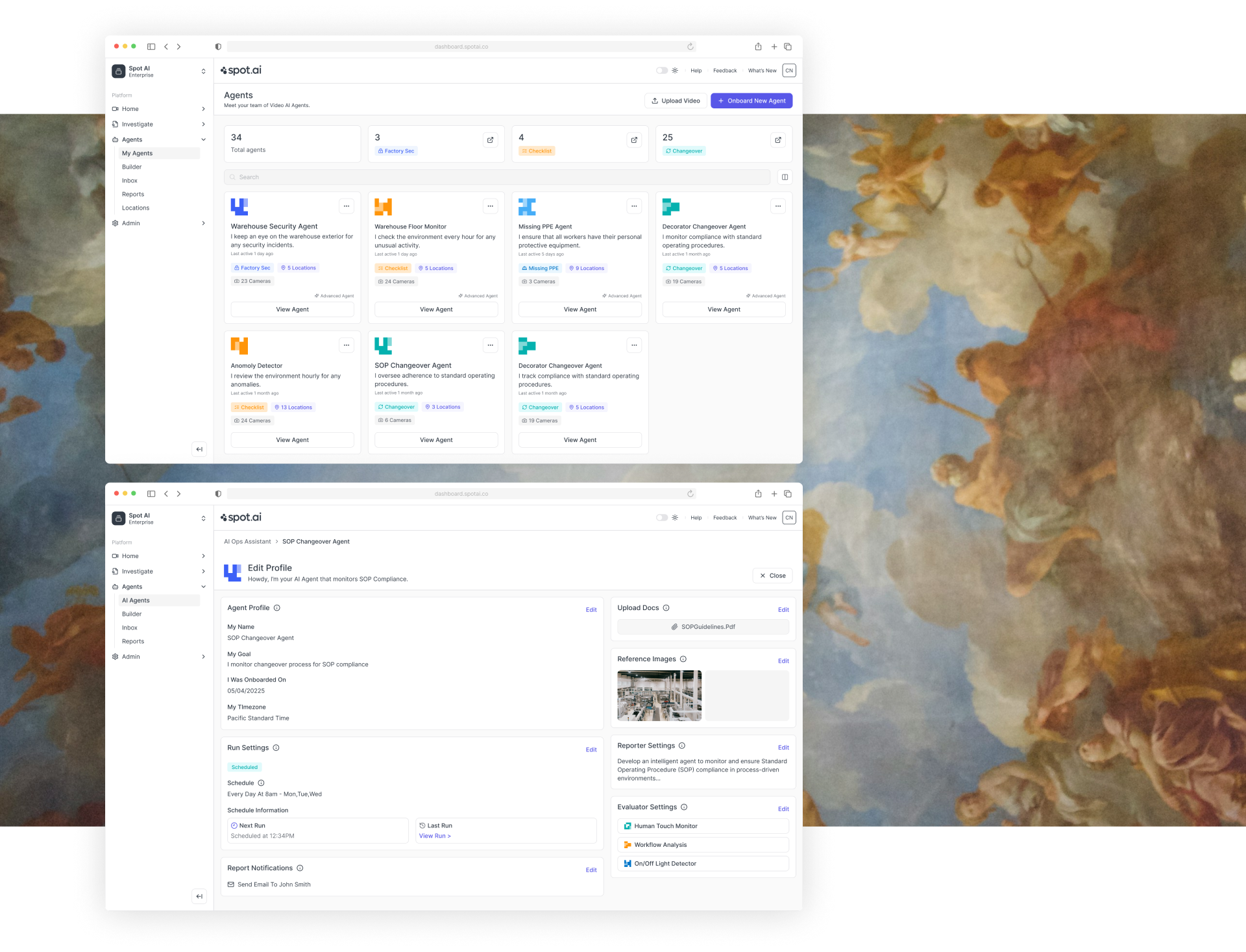
We designed Spot’s Video AI Agents to help teams detect risk sooner, summarize what happened instantly, and trigger next steps - without requiring constant monitoring or complex camera expertise.
prototype
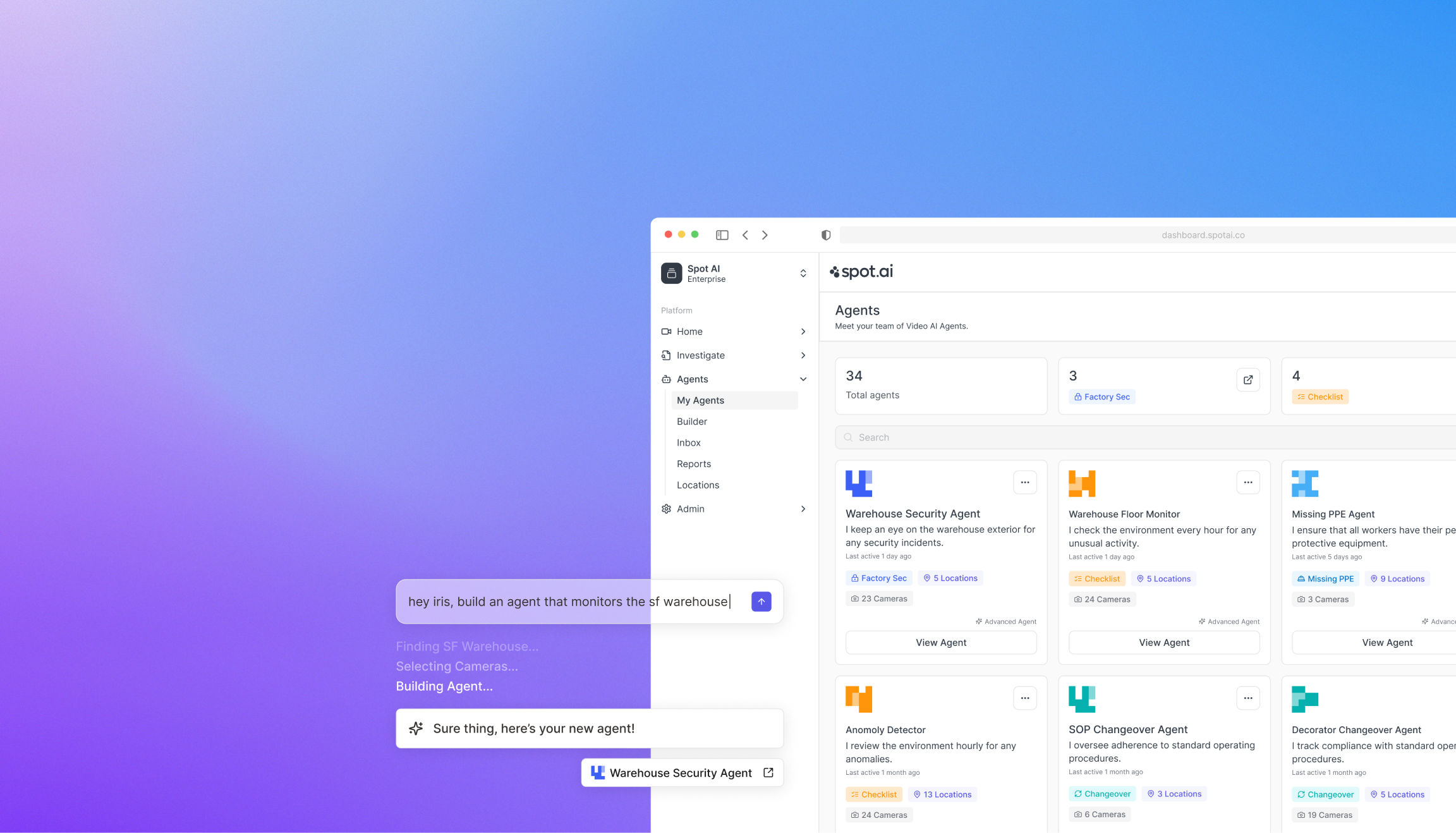
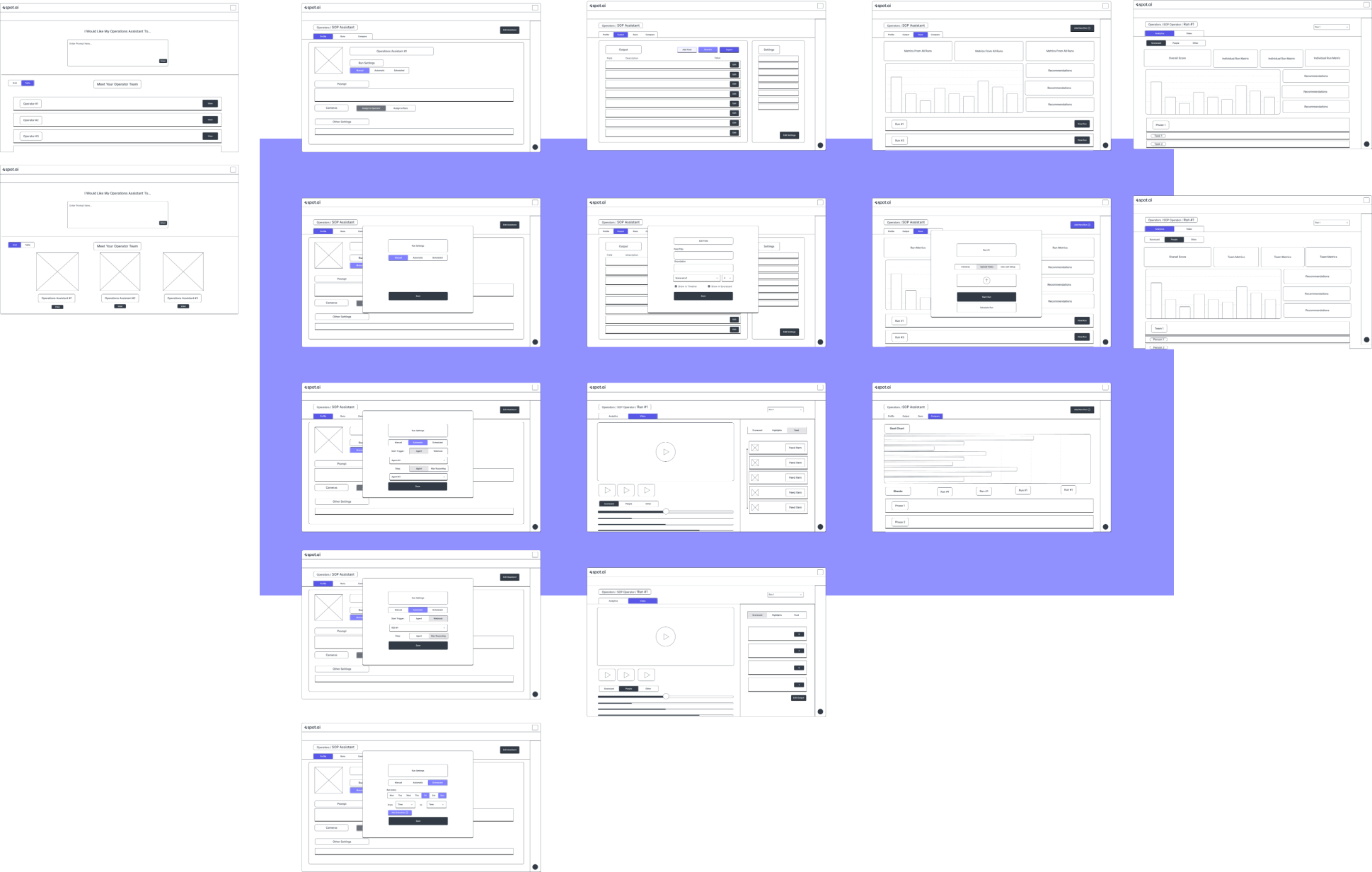
Building an Agentic intelligence platform that works 24/7.
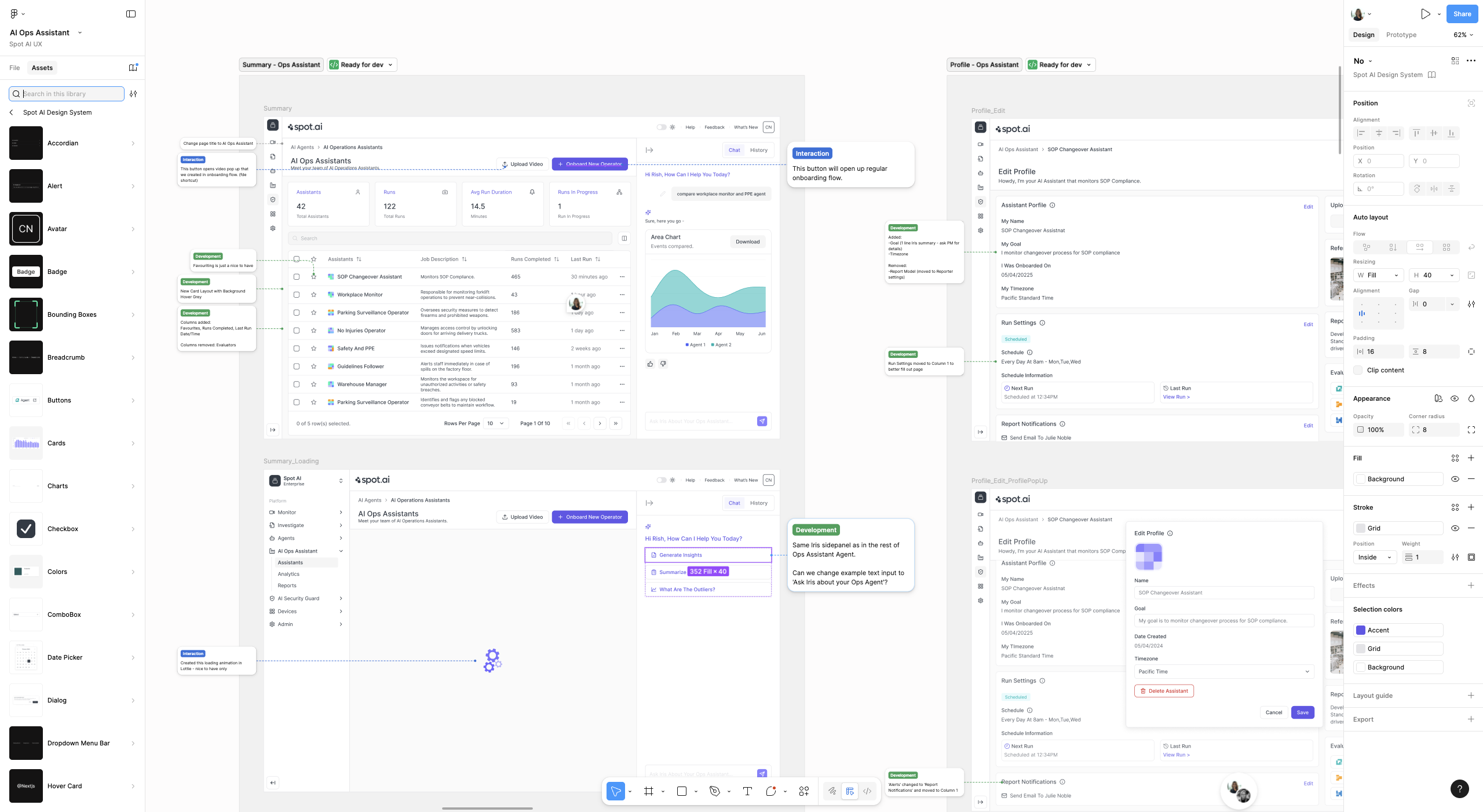
We partnered with Fortune 500 clients to design a system where AI Agents could understand scenes, answer natural-language questions, and generate operational insights across multiple cameras - all within workflows that felt familiar and non-intrusive to frontline teams.
Language Selection


Search by Cuisine
Features

Prototype Walk Through

Prototype Walk Through

AI Generated Routes


In Built Payment
Live Notifications

test
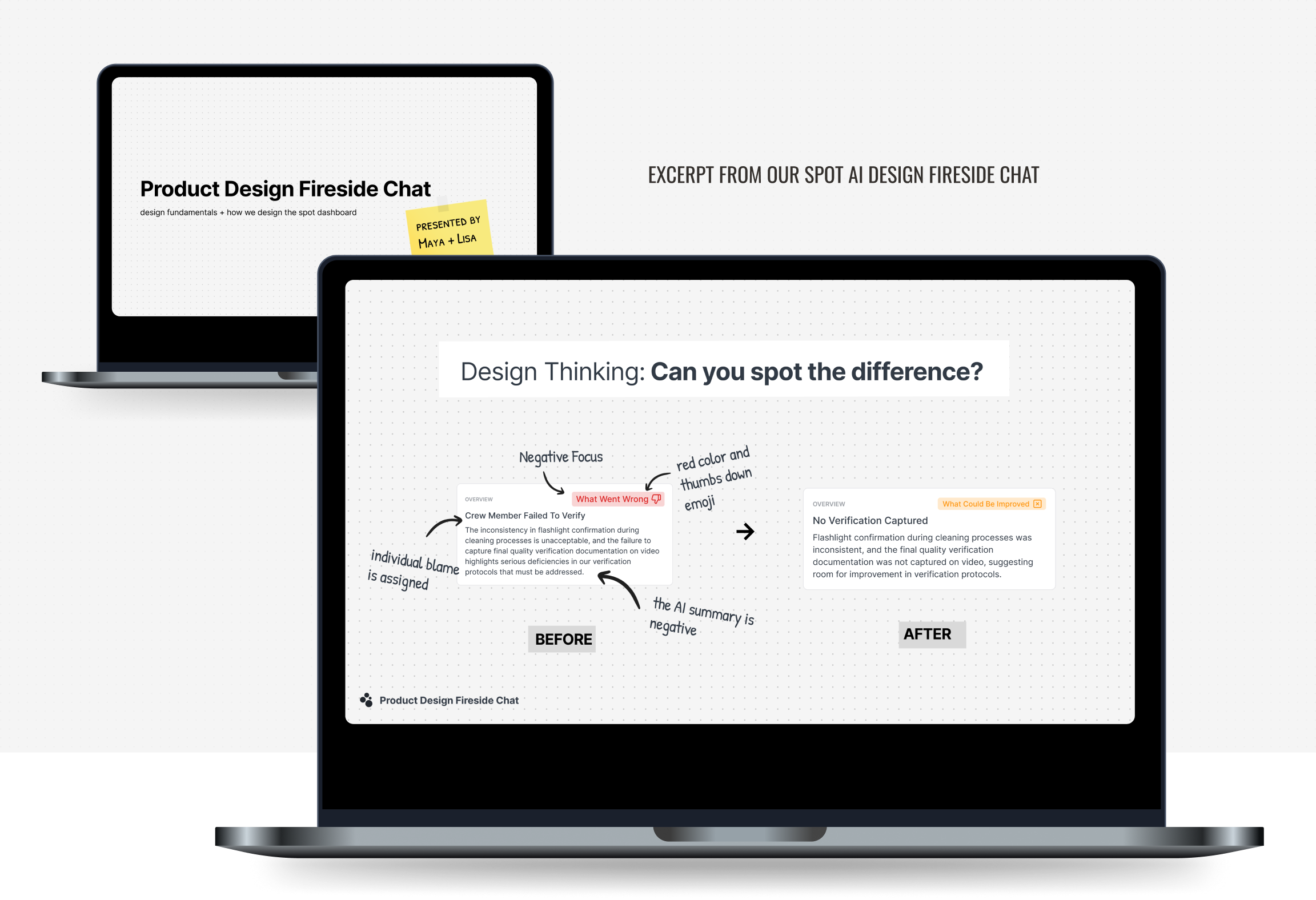
Our biggest challenge wasn't capability - it was trust and culture.
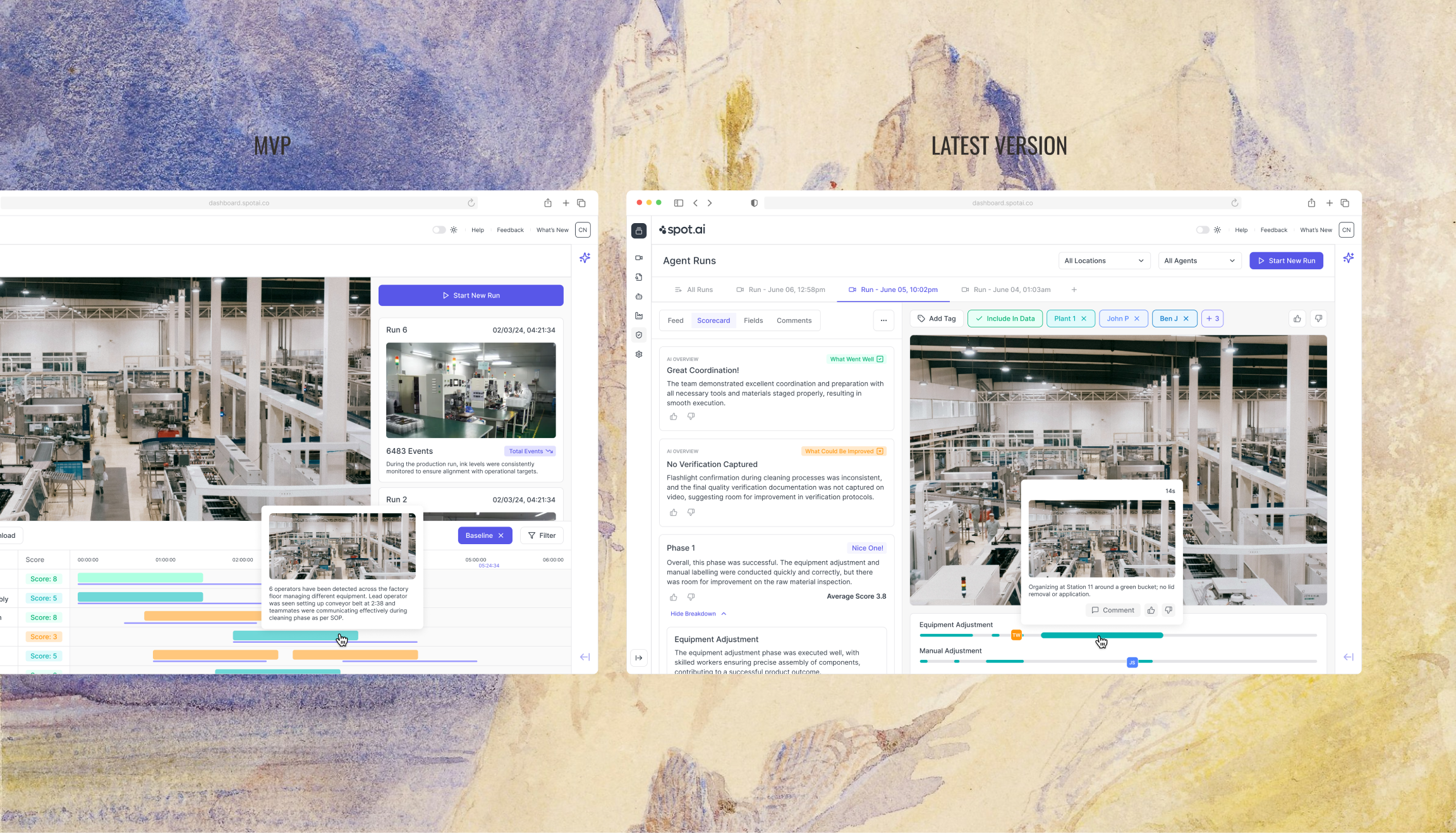
Early feedback showed strong excitement, but also hesitation: teams were reticent to trust the AI's feedback, and concerned that the tool would be intimidate operators on-the-floor. We iterated on language, UX patterns, and workflows to reinforce psychological safety, trust and shared accountability.
implement
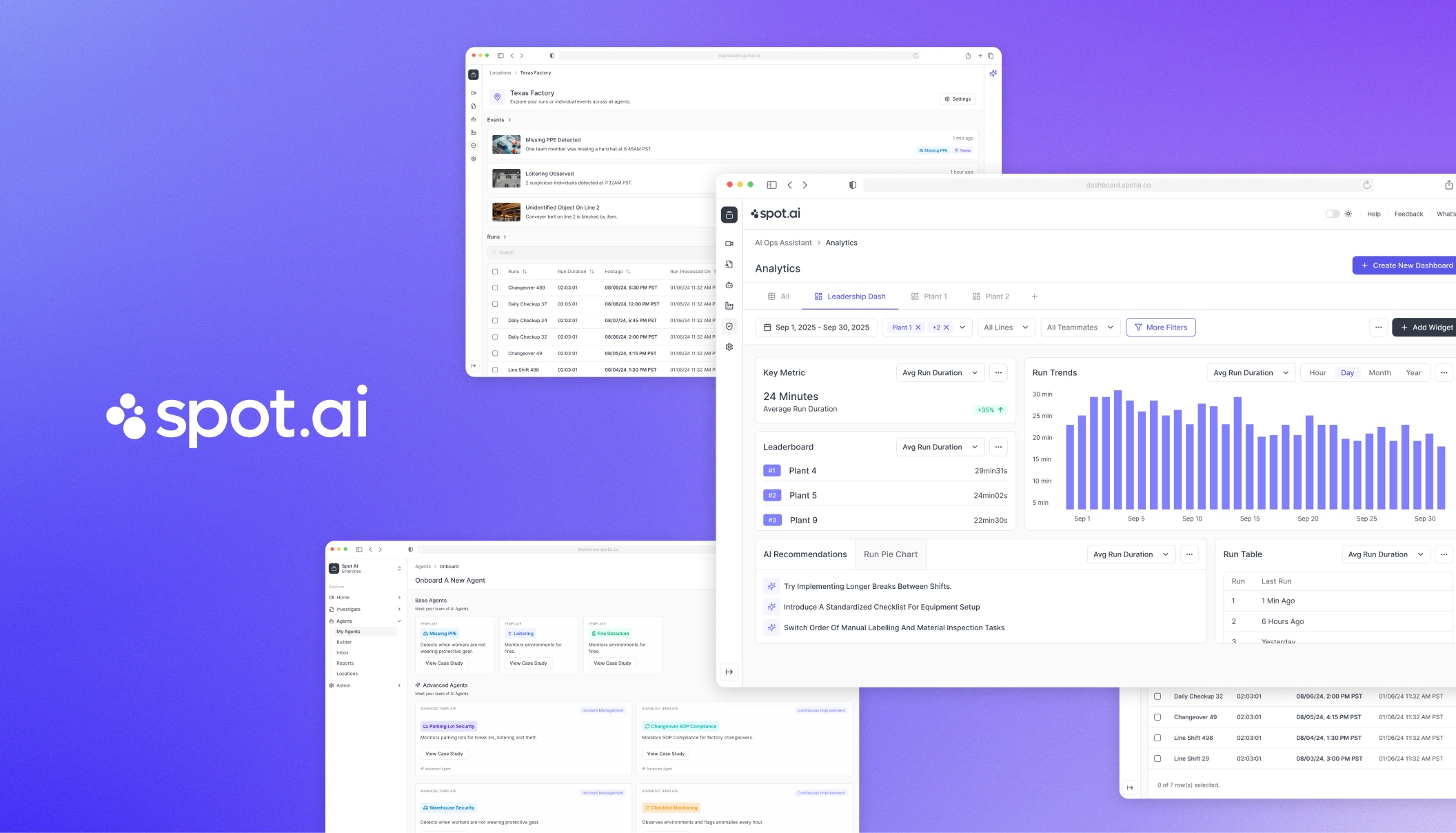
AI Agents that monitor, analyze and act on video in real time.
We refined the system around practical, real-world workflows: clearer evidence presentation, faster retrieval, and “what to do next” actions built into the moment. This enabled teams to reduce investigation time, improve incident consistency, and use near-misses as coaching opportunities - not blame events.
Spot AI Video Agents
Other Projects
other projects
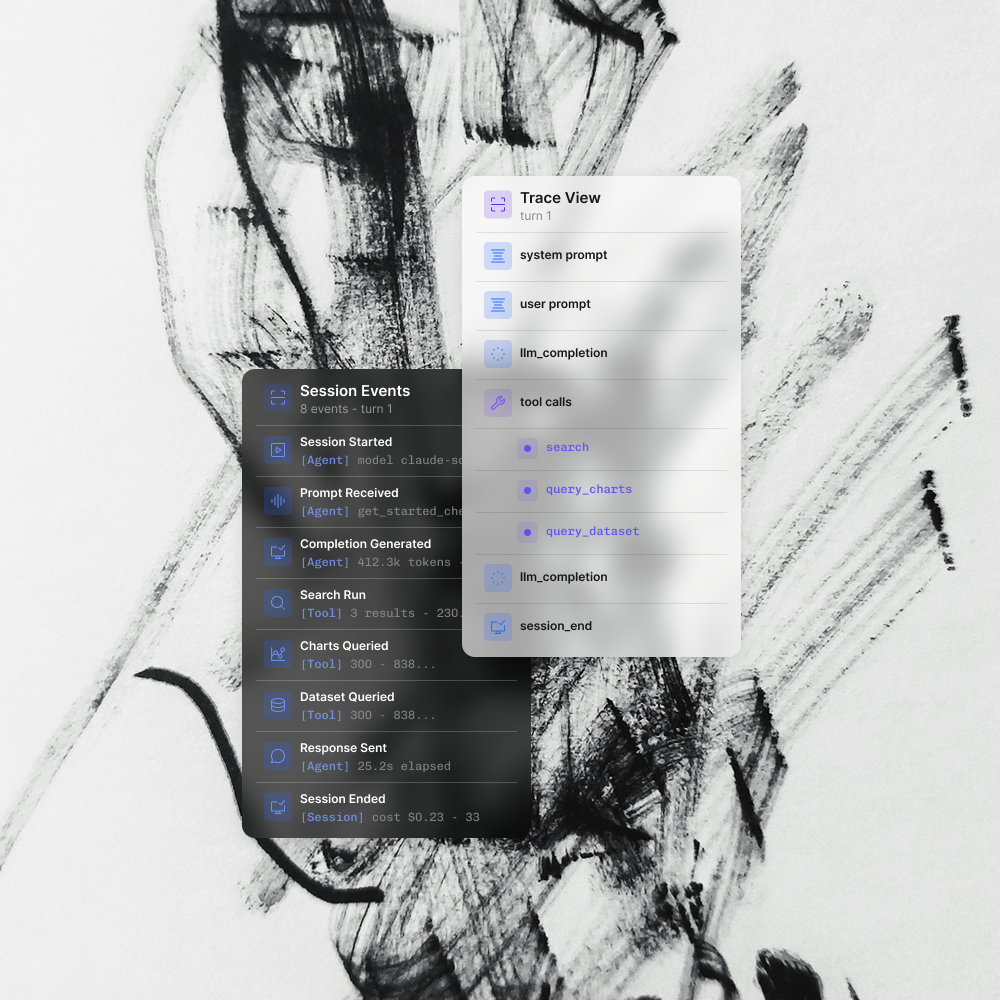
Amplitude Agent Analytics
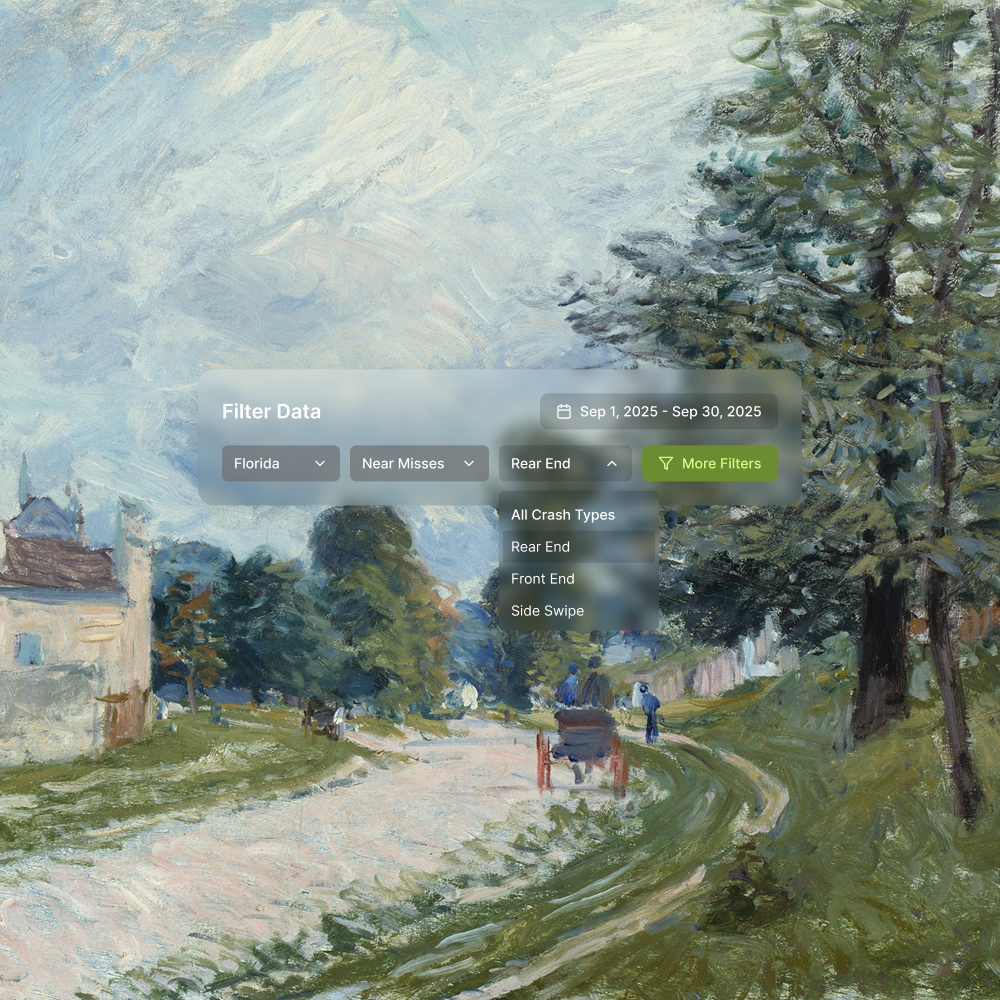
Accenture Intelligent Mobility
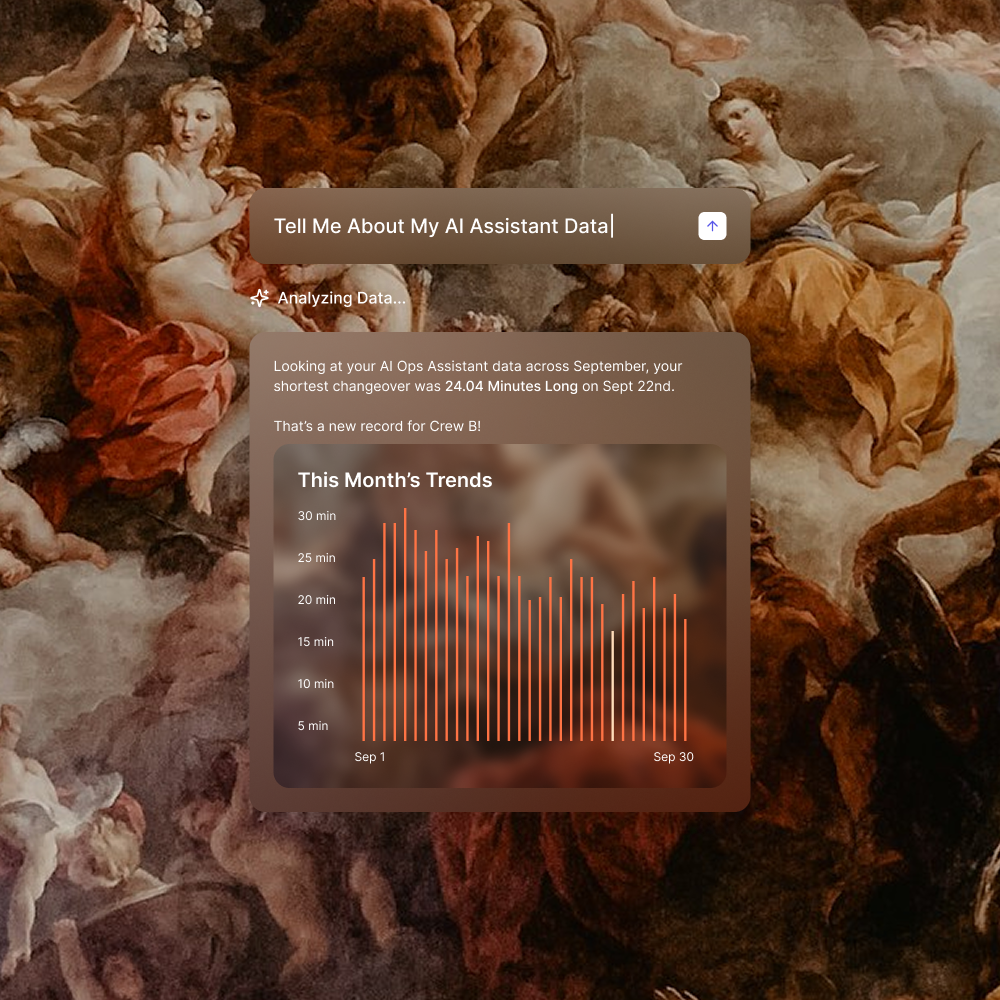
Modular LLM-Driven Dash